The Hidden Price of Real: Why Authentic Content Costs More Than Brands Expect
There is a persistent belief circulating through marketing departments across the United States that raw, unscripted content is the affordable alternative to polished production. The logic appears sound on the surface: fewer crew members, no elaborate set design, no post-production gloss. Point a camera at something real, capture it, and publish it. The audience, so the thinking goes, will reward the honesty.
The reality is considerably more complicated—and considerably more expensive.
Brands that have made the strategic pivot toward authenticity-driven content frequently discover, often after the fact, that the production economics of capturing genuine moments bear little resemblance to their initial projections. The costs do not disappear. They relocate, distribute across different line items, and accumulate in ways that traditional production budgets are not designed to track.
Why "Simple" Is a Production Illusion
The confusion begins with a category error. Brands tend to benchmark the cost of authentic content against the most visible expenses of high-polish production: the lighting rigs, the studio rental, the director of photography. When those elements are absent, the assumption is that costs fall proportionally.
But the visible expenses of polished production are not where most of the budget actually lives. The real cost of any video—scripted or unscripted—is in the hours required to produce something that works. And authentic content, by its nature, demands more hours, not fewer.
A scripted brand video operates from a blueprint. Every moment is anticipated. The crew knows what they are capturing before they arrive on set. The editor receives organized footage with clear intent. The structure is determined before a single frame is recorded.
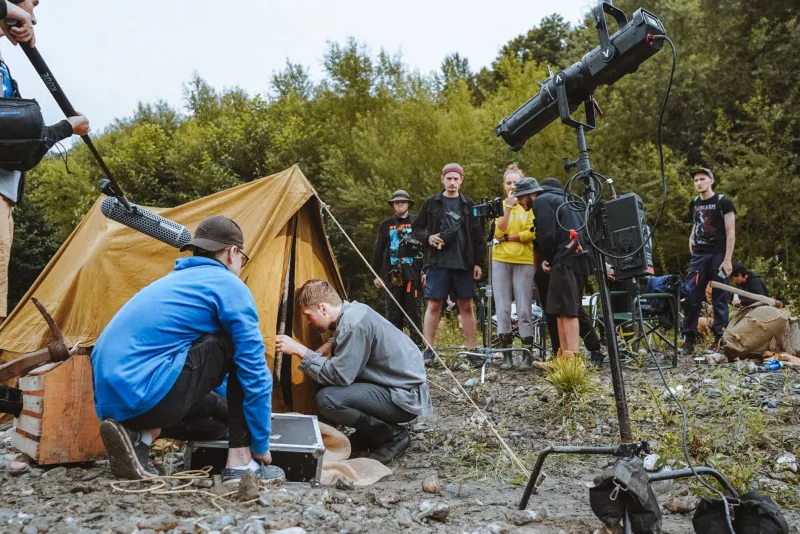
Unscripted content inverts this entirely. The crew must be present for extended periods, waiting for genuine moments to emerge. The director must possess the skill to recognize those moments in real time and the restraint not to manufacture them. The editor must then excavate a coherent narrative from hours of footage that was never designed to tell a story in sequence. Each of these requirements carries a cost that most brands fail to anticipate.
The Ratio Problem
In traditional production, shoot ratios—the proportion of footage captured to footage used—are managed tightly. A well-run commercial shoot might operate at a ratio of ten to one. Experienced productions often run leaner.
Authentic content production routinely operates at ratios of fifty to one. Sometimes higher. A brand attempting to capture a genuinely candid customer interaction, an unscripted employee moment, or a real-time event without staging it will generate enormous volumes of raw footage. The majority of that footage will be unusable—not because of technical failure, but because authenticity, by definition, cannot be controlled.
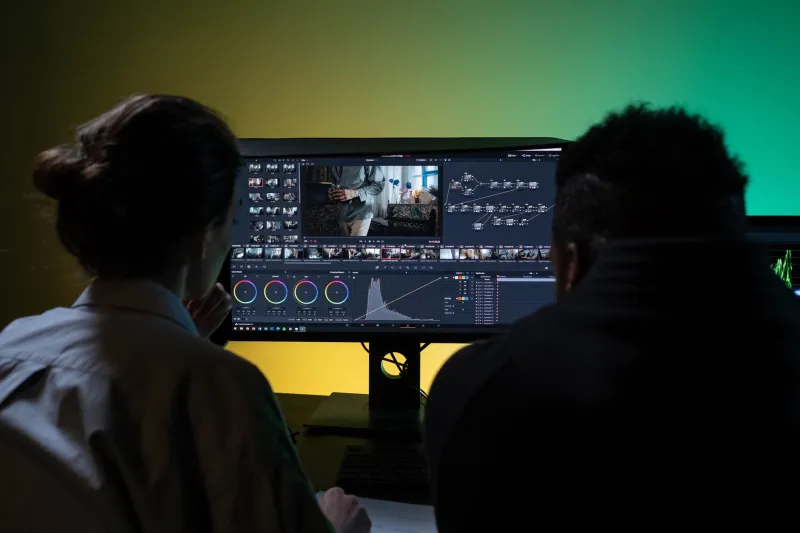
Every hour of footage requires time to review, log, and evaluate. That time belongs to skilled editors and producers whose rates are not reduced simply because the content is unpolished. The editing phase of authentic content is frequently longer than the editing phase of scripted production, because the story must be discovered rather than assembled.
Strategic Restraint Is a Skill—and Skills Cost Money
One of the least-discussed expenses in authentic content production is what might be called the cost of restraint. The moments that make unscripted content resonate—the hesitation before an answer, the unrehearsed reaction, the imperfect pause—are moments that must be preserved rather than corrected. Preserving them requires an editor who understands precisely when imperfection serves the story and when it undermines it.
This is not a common skill. It is a specialized editorial sensibility that takes years to develop, and it commands compensation accordingly. Brands that hire generalist editors to cut authentic content frequently discover that the footage loses its texture in post-production. The moments that made it feel real are smoothed away by instincts trained on different material.
The same applies to the production side. Capturing authentic moments without disrupting them requires a camera operator who can become functionally invisible—someone skilled enough to maintain technical quality while working in uncontrolled environments without drawing attention to the process. That combination of technical competence and behavioral discipline is not inexpensive.
Multiple Takes, Multiple Attempts
There is an irony embedded in the production of authentic content that brands rarely acknowledge publicly: most of it requires multiple attempts. The candid moment that appears in the final cut is frequently the third or fourth version of that moment—not because it was staged, but because the first attempts were disrupted by external factors, poor framing, or technical issues that could not be corrected without breaking the atmosphere.
This is not a failure of authenticity. It is simply the reality of working without the scaffolding that scripted production provides. But it does mean that the efficiency gains brands anticipate from abandoning scripts rarely materialize in the way they expect.
A Framework for Budgeting Authenticity Honestly
For brands committed to authentic content strategy, the path forward is not to abandon the approach—it is to fund it accurately. Several principles help establish a more realistic budget framework.
Account for extended capture windows. Authentic moments cannot be scheduled. Budget for production days that are longer than their scripted equivalents, and resist the temptation to compress the timeline to control costs. Compression typically produces footage that is neither authentic nor polished—it occupies an expensive middle ground that serves no strategic purpose.
Invest in editorial talent proportionally. The edit is where authentic content either succeeds or collapses. Allocating budget appropriately to post-production—and specifically to editors with demonstrated experience in unscripted formats—is not optional. It is the difference between footage that resonates and footage that merely exists.
Build in a review and selection phase. Before editing begins, someone must review the raw footage and identify the moments worth building around. This phase is often absent from initial budgets and almost always takes longer than anticipated. It should be treated as a distinct production stage with its own line item.
Expect and budget for iteration. Authentic content rarely works on the first attempt. Building revision cycles into the budget—and the timeline—prevents the kind of cost overruns that emerge when brands discover mid-project that their footage is insufficient.
The Real Cost of Getting It Right
The market's enthusiasm for authentic content is well-founded. Audiences across the United States have demonstrated a clear preference for brand communication that feels honest over content that feels constructed. The strategic direction is sound.
But strategic soundness and production simplicity are not the same thing. The brands that are executing authentic content most effectively are not spending less than they spent on polished production. They are spending differently—and in many cases, spending more. They have simply made peace with the true economics of capturing something real.
For any brand considering a pivot toward unscripted content, the first budget conversation should not be about what can be eliminated. It should be about what must be added to make the approach work. The authenticity premium is real. Accounting for it honestly is the only way to produce content that justifies it.