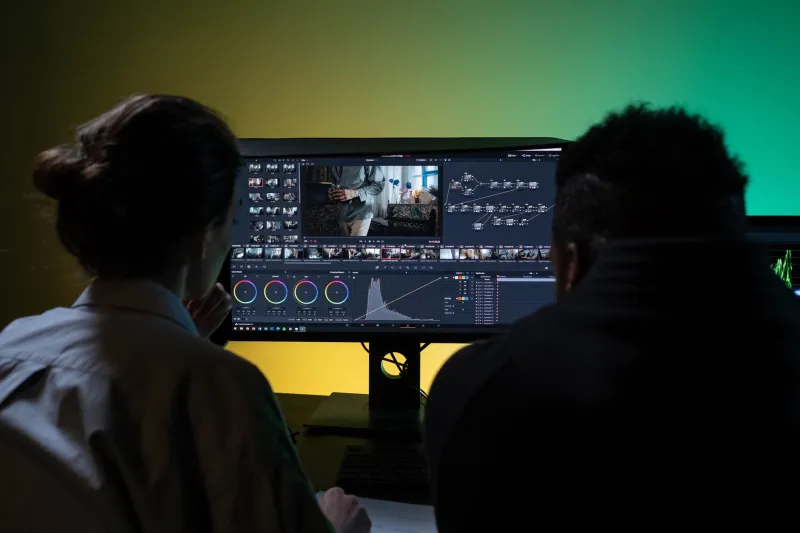
Cut by Cut: How Edit Rhythm Is Shaping What Audiences Remember About Your Brand
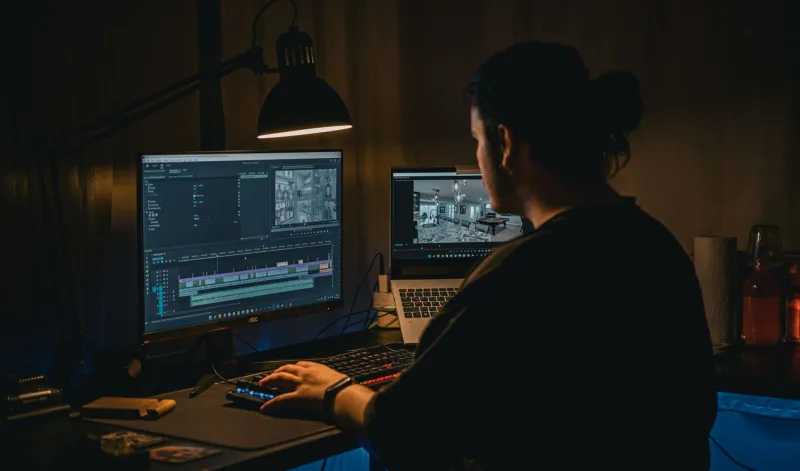
There is a moment in every poorly edited brand video when a viewer cannot quite explain why they feel exhausted. The footage may be sharp, the color grade polished, and the narrative sound. Yet something about the experience feels relentless—almost punishing. That discomfort is rarely a visual problem. It is a temporal one. The pacing of edits, the duration of each held frame, and the rhythm between transitions are doing something to the brain that most marketers have never been trained to consider.
The science is not new, but its application to brand video remains surprisingly underdeveloped. Cognitive neuroscience has long established that the human brain processes visual information in discrete attentional windows. When cuts arrive faster than the brain can complete its processing cycle, it does not simply keep up—it begins to suppress. Audiences become passive. Retention drops. The emotional connection that brand storytelling depends on starts to dissolve, not because the story is weak, but because the editing tempo has outpaced the audience's capacity to absorb it.
The Neuroscience of the Edit Window
Researchers studying cinematic cognition have identified what some call the "attentional blink"—a brief period of roughly 200 to 500 milliseconds during which the brain is consolidating one visual event before it can fully register the next. In practical editing terms, this means that cuts arriving in rapid succession can create a kind of cognitive queue that the viewer's working memory cannot process efficiently.
For brand video, this has a direct consequence. When a viewer cannot complete the processing loop on a single frame or scene before the next one arrives, the associative memory—the mechanism that connects a brand visual to an emotional response—fails to form cleanly. The brand may be present in every frame, but it does not land. The message is technically delivered and functionally lost.
Conversely, deliberate pacing—holding a shot slightly longer than instinct might suggest, allowing a moment of visual stillness before advancing the narrative—gives the brain permission to encode. Audiences who are not rushed tend to feel more in control of the viewing experience. And audiences who feel in control are far more likely to trust the source of the content.
Why Some Brands Feel Commanding and Others Feel Chaotic
The subjective experience of watching a brand video that feels authoritative is almost always a pacing phenomenon. Think of the visual language associated with luxury automotive brands, financial institutions, or premium consumer goods. These categories have long understood, even if intuitively, that slower cutting rhythms signal confidence. A brand that holds its shots is a brand that believes its imagery is worth holding.
By contrast, brands that over-edit—stacking cuts at machine-gun frequency to project energy or modernity—often produce the opposite effect. The frantic rhythm communicates anxiety rather than dynamism. Viewers sense the overcompensation even when they cannot articulate it. What was intended to feel exciting reads as desperate.
This distinction matters enormously in the US market, where audiences are exposed to extraordinary volumes of video content daily across streaming platforms, social feeds, and connected television. Viewers have developed sophisticated, if subconscious, pattern recognition. They know what polished editing feels like. They know what rushed editing feels like. And they assign brand value accordingly.
Diagnosing Pacing Problems in Existing Content
For production teams and brand managers reviewing existing video assets, there are several practical diagnostic frameworks worth applying before investing in new content.
Average Shot Length (ASL) Analysis Calculate the average duration of each cut in your video. A high-energy social clip might reasonably sustain an ASL of 1.5 to 2.5 seconds. A brand narrative or product story intended to build trust typically benefits from an ASL of 3 to 6 seconds. If your brand documentary is cutting at the same rate as a TikTok transition reel, you have a pacing mismatch that no amount of color grading will correct.
Emotional Beat Mapping Overlay your edit timeline against the intended emotional arc of the piece. Identify where the video is supposed to create resonance—a product reveal, a customer testimonial, a brand values moment. Ask whether the edit timing around those beats gives the viewer enough time to feel the intended emotion, or whether the next cut arrives before the moment has any chance to register.
Platform Context Calibration Pacing that is appropriate for a 30-second pre-roll advertisement is not appropriate for a three-minute brand film on YouTube. Each platform carries its own attentional contract with the viewer. Repurposing content without re-editing for platform-appropriate rhythm is one of the most common and most costly errors in brand video distribution.
The Strategic Value of the Held Frame
One of the most underutilized tools in the brand editor's toolkit is the deliberate hold—a moment where the cut simply does not come when the audience might expect it. This technique, borrowed from long-form documentary and prestige television, creates a specific neurological effect: it signals that what is on screen is worth sustained attention.
Brands that incorporate held frames around key visual identifiers—a logo reveal, a product in use, a human face mid-reaction—are essentially training their audience's memory architecture. The brain, given adequate time with a visual stimulus, begins to encode it more deeply into associative memory. This is the neurological mechanism behind brand recall, and it is directly manipulable through edit timing.
The irony is that in an era obsessed with speed, the brands gaining the most durable audience relationships are often the ones willing to slow down. Not every piece of content benefits from this approach—short-form social content operates under different constraints. But for any video asset intended to build brand equity over time, the strategic hold is one of the most powerful and least expensive tools available.
Rebuilding Pacing as a Production Standard
For agencies and internal creative teams, the practical implication is straightforward: edit pacing should be treated as a defined production parameter, not an afterthought left to the editor's instinct. Before a project enters post-production, the intended ASL, the emotional beat map, and the platform distribution plan should be documented and used as editorial guidelines alongside the script and shot list.
This is not a constraint on creative freedom. It is a framework that gives creative decisions a functional foundation. An editor who understands that a particular brand values deliberate, confident pacing will make different choices at every stage of the cut—not because they are following a formula, but because they understand the communicative intent behind the tempo.
At Sky Media Digital, the approach to post-production has always treated time as a creative material in its own right. The seconds and fractions of seconds between cuts are not empty space. They are the architecture through which audiences encounter, process, and ultimately remember a brand. Getting that architecture right is not a technical refinement. It is a strategic imperative.
The brands that understand this are not simply making better videos. They are building stronger neural pathways between their identity and their audience's memory. In an attention economy where every impression is contested, that is not a small advantage. It is a decisive one.